

Recorded Course · Self-Paced
Understand what's actually in your supplements before you buy another tub
A recorded course for recreational lifters and gym-goers who want to know what protein, creatine, and pre-workout ingredients actually do, based on ISSN position stands and published research rather than packaging copy.
Educational content only. No supplements are sold or recommended.
The problem
The supplement shelf was not built to be understood
You stand in the aisle holding two tubs of pre-workout. One costs almost twice as much as the other. Both labels list a "proprietary blend" totaling eight grams, with eleven ingredients printed underneath in a font that gets smaller toward the bottom. There is no way to know, from the label alone, how much of anything you are actually getting.
Multiply that moment by every protein powder, BCAA mix, fat burner, and recovery blend on the shelf, and it becomes clear why so many recreational gym-goers end up spending real money each month on products they cannot fully explain. This course does not sell you a better answer. It teaches you how to find one yourself, using the same position stands and peer-reviewed research that sports nutrition researchers reference.
The material is organized around four practical skills: reading a label correctly, calculating your own protein target from body weight, understanding what creatine research does and does not show, and recognizing pre-workout ingredients that show up on labels without meaningful human evidence behind them.

What the course contains
A recorded curriculum, not a sales pitch
The curriculum
Eight modules, watched at your own pace
Each module is a short recorded lesson you can pause, rewind, and revisit whenever a new product shows up on a shelf. The sequence moves from marketing literacy to label mechanics, then into the two most researched categories: protein and creatine, before closing with pre-workout ingredients and a personal evaluation framework.
Why supplement marketing outpaces the research
How a product can be legally sold and marketed with confident language while the underlying human evidence is thin, mixed, or entirely absent.
Protein: what it does and how much you need
A walk through ISSN position stand recommendations, expressed per kilogram of body weight, and how that compares with what a typical tub actually delivers per scoop.
Creatine monohydrate and the depth of its research base
Why creatine is frequently described as one of the most studied compounds in sports nutrition, what loading and maintenance protocols look like, and where the evidence is strong versus where claims outrun it.
Pre-workout ingredients without meaningful human evidence
A comparison of well-studied stimulant and non-stimulant ingredients against additions that appear on labels largely because they sound active, not because trials in humans support the doses used.
Reading a Supplement Facts panel line by line
Serving size, percent daily value, and the difference between an active ingredient list and a blend, using real label examples with names removed.
Proprietary blends and hidden dosages
Why a single combined weight for eight or ten ingredients tells you almost nothing about how much of any individual compound you are consuming.
Third-party testing marks and what they verify
What a certification mark on a label can and cannot tell you about purity, banned substances, or effectiveness.
Building your own evaluation framework
A repeatable checklist you can apply to any new product, so the course keeps working long after you finish watching it.
What grounds this course
Built from published sources, not sponsorships
ISSN position stand alignment
Protein and creatine sections are structured around published International Society of Sports Nutrition position stands.
Peer-reviewed source list
Every claim in the recordings is traceable to a cited study or review, listed in the accompanying reference sheet.
Plain-language translation
Research language is unpacked into everyday terms without dropping the nuance that usually gets lost in marketing summaries.
No brand sponsorship
No supplement company funds, sponsors, or reviews this course, and no products are sold or recommended within it.
A skill, not a shortcut
Learning to read a label takes about the same time as scrolling a review site
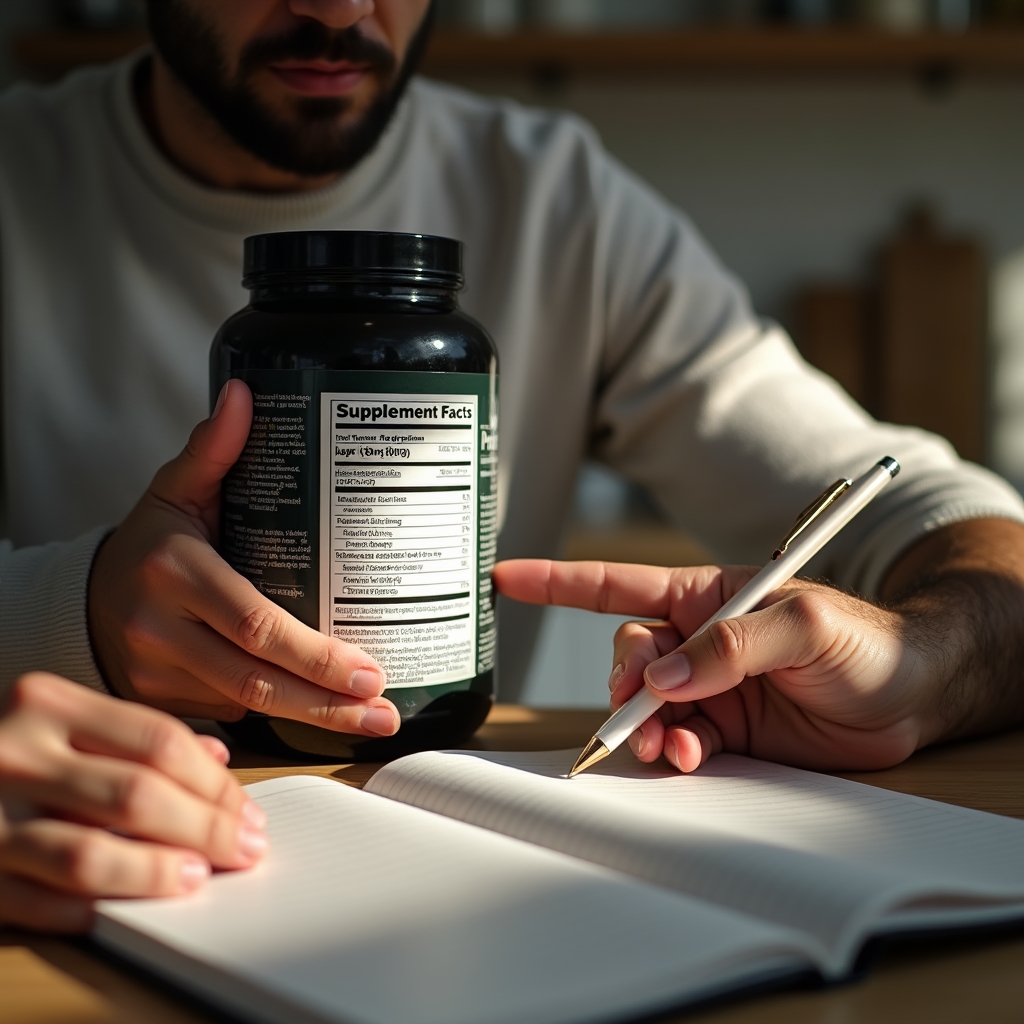
Most people trying to compare supplements end up reading reviews written by people who also do not know what the ingredients do. This course replaces that habit with a five-minute label check you can run in the store, on your phone, before anything goes in the cart.
You will practice on real label layouts with brand names removed, so the pattern recognition transfers to whatever is actually on the shelf in front of you. That includes spotting where a "blend" starts, whether a daily value is even listed, and whether a dose matches what a study actually used.

How the course was made
Recorded lessons built around the research, not around a product line
The material was developed by working through publicly available ISSN position stands and peer-reviewed literature on protein intake, creatine supplementation, and common pre-workout compounds, then translating those findings into recorded lessons with plain examples.
Because the format is video, you can pause on a label mid-lesson, rewind an explanation you want to hear again, or skip ahead to the module that matches whatever question sent you looking for this course in the first place.
Review the module listBefore you enroll
Common questions
Is this course affiliated with any supplement brand?
No. The course does not sell, distribute, or receive sponsorship from any supplement manufacturer. It exists to explain publicly available research and label mechanics, not to promote a product.
Do I need a background in exercise science to follow along?
No prior background is assumed. Terms from the research literature are explained as they come up, and each module builds on the previous one rather than assuming outside knowledge.
Will the course tell me which specific products to buy?
No specific brands or products are recommended. The goal is that you leave able to evaluate any product on a shelf yourself, using the label-reading and research-literacy skills covered in the modules.
How is the course delivered?
All eight modules are pre-recorded video lessons, watched on your own schedule, alongside downloadable worksheets referenced in course-materials.html.
Does this replace advice from a doctor or registered dietitian?
No. This is educational content about how supplement research and labeling work. It is not personalized medical, nutritional, or health advice, and does not substitute for consulting a qualified professional about your individual situation.
Start with the module list
Course Materials lays out every module, what it covers, and the worksheets attached to it, so you can see exactly what the recordings walk through before you begin.
View Course Materials